
As parents, we track every milestone - from the first steps to the first day of primary school. Yet one vital aspect of our children's development often flies under the radar: their vision. Clear vision is the silent foundation of a child's learning, social interaction, and confidence.
In Singapore, often dubbed the "myopia capital of the world," tracking visual health is even more critical. While the Health Promotion Board (HPB) has successfully stabilized Primary 1 myopia rates around 26%, that number still surges to roughly 65% by the time students finish Primary 6. For children who already wear corrective lenses, an annual checkup is not just a routine appointment - it is essential healthcare to ensure their developing eyes keep pace with their fast-changing world.
1. Why Visual Health Matters in Early Development
Children do not know what they cannot see. A child experiencing blurry distance vision will rarely complain because they assume everyone sees the world through the same soft focus.
From reading the whiteboard in a classroom to judging the distance of a flying football during PE class, sharp eyesight is fundamental. When vision is compromised, a child's brain has to work twice as hard to process basic information, leading to mental fatigue, frustration, and an unintended aversion to reading or sports.
2. Why More Kids Need Eyeglasses Today
If it feels like nearly every child in your neighborhood wears glasses, you are not imagining things. The rise in pediatric vision issues stems from a perfect storm of modern lifestyle changes.
From home-based learning to gaming, children are engaging in intense, prolonged near-work on digital screens throughout their waking hours.
Sunlight triggers dopamine release in the retina, which naturally slows down the structural elongation of the eyeball - the physiological cause of short-sightedness.
Children with one or two myopic parents face a significantly higher biological risk of developing refractive errors early in life.
3. The Compounding Benefits of Regular Pediatric Eye Exams
For a child who already wears eyeglasses, an outdated prescription does more than cause mild blurriness - it can actively accelerate vision worsening. Regular visits to a qualified optometrist offer critical protections.
Early Detection of Hidden Conditions
Eye checkups evaluate far more than just "power" (refractive error). A comprehensive exam screens for silent issues like amblyopia (lazy eye) - where the brain favors one eye over the other - and strabismus (crossed or misaligned eyes). If caught early, these conditions can be corrected; if left untreated past early childhood, they can lead to permanent visual impairment.
Accurate Prescription Management
A child's eyes grow just as rapidly as the rest of their body. An incorrect or outdated lens prescription forces the eye muscles to strain constantly to achieve focus. Regular updates ensure their lenses support natural visual development rather than forcing the eye to overcompensate.
Safeguarding Long-Term Eye Health
Unchecked childhood short-sightedness can snowball into high myopia (prescriptions worse than -5.00 dioptres) by adulthood. High myopia permanently alters the physical structure of the eye, drastically increasing the lifetime risk of serious conditions.
| Condition | Adult Health Risk in High Myopia Cases |
|---|---|
| Cataracts | Early onset and rapid clouding of the natural lens. |
| Glaucoma | Increased intraocular fluid pressure leading to optic nerve damage. |
| Retinal Detachment | High risk of the retina tearing away from the back of the elongated eyeball. |
| Macular Degeneration | Degeneration of the central retina responsible for sharp, straight-ahead vision. |
Boosting Classroom Performance and Self-Esteem
When a child can see clearly without squinting or straining, their academic engagement transforms. They participate more freely, experience fewer unexplained headaches during homework, and approach social interactions with the confidence that comes from moving comfortably through their environment.
4. When and How Often Should Your Child's Eyes Be Examined?
While Singaporean schools provide baseline visual screenings through the School Health Service, these serve as basic filters rather than exhaustive clinical evaluations. If your child already wears glasses, follow this standardized timeline to protect their vision.
Initial screening by a pediatrician or specialist to ensure basic tracking, alignment, and eye health are developing normally.
An essential milestone to check for early refractive errors, amblyopia, or structural issues before structural eye growth accelerates.
A comprehensive exam prior to entering primary school to guarantee visual limitations will not interfere with reading or early classroom learning.
For children who already wear corrective lenses, annual eye exams are critical to monitor prescription changes and evaluate myopia control options.
5. Practical Steps for a Stress-Free Children's Eye Exam
Medical environments can intimidate young children. Follow this structured approach to ensure a smooth, successful clinic visit.
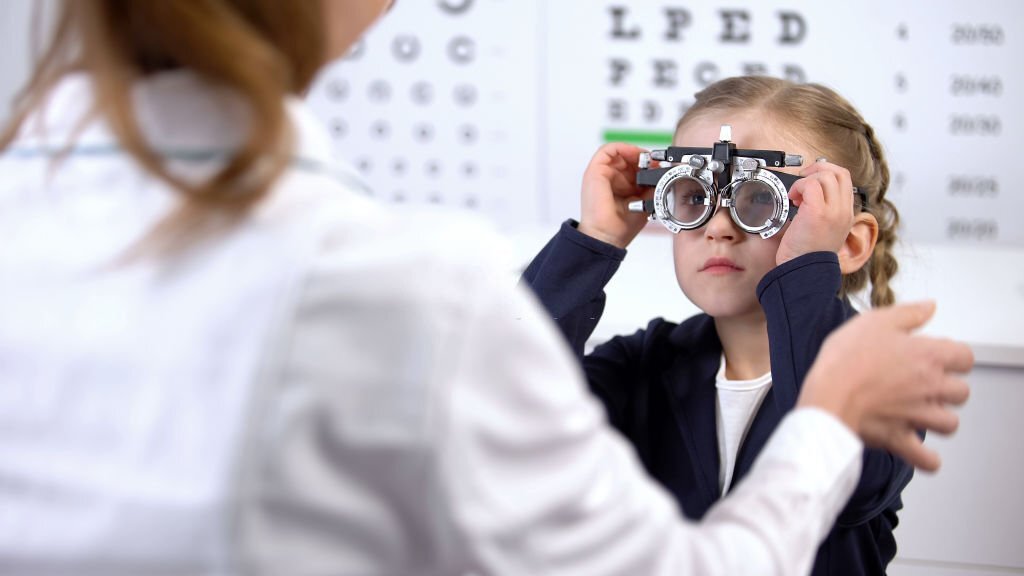
Choose an optometrist who specializes in children's vision care. They possess the specialized, non-invasive equipment and patient communication style required to keep children calm and cooperative during testing.
Explain the process beforehand using simple, reassuring language. Frame it as a game where they look at pictures, shapes, or letters - and emphasize that there are no wrong answers and no needles involved.
Schedule the appointment during your child's peak energy hours. Avoid nap times or the late afternoon when exhaustion can cause irritability, leading to inaccurate responses during subjective testing.
Encourage your child to ask the eye doctor questions. Letting them pick out their own frames or case colors gives them a sense of ownership over their eye care journey and dramatically improves long-term compliance.
To mitigate visual strain at home, teach your child that for every 20 minutes of close-up reading or screen time, they must look at an object at least 20 feet (6 metres) away for at least 20 seconds to relax their eye muscles. Build it into their daily screen routine.